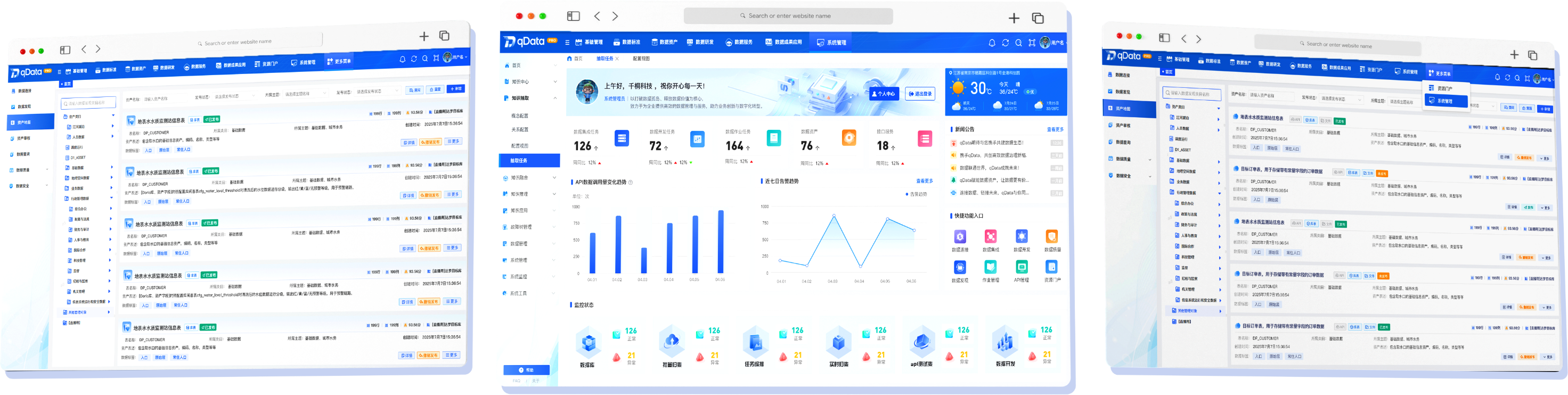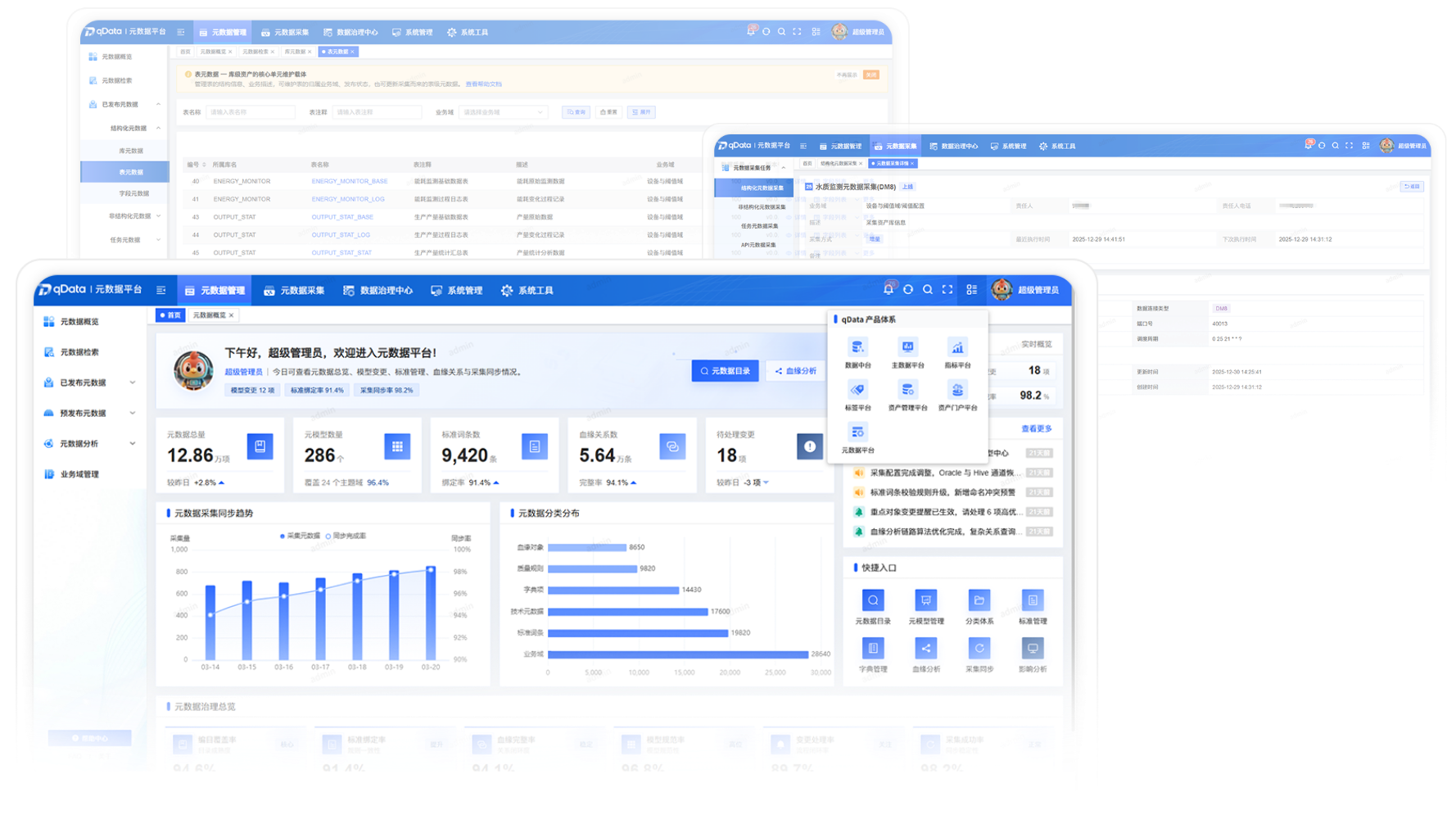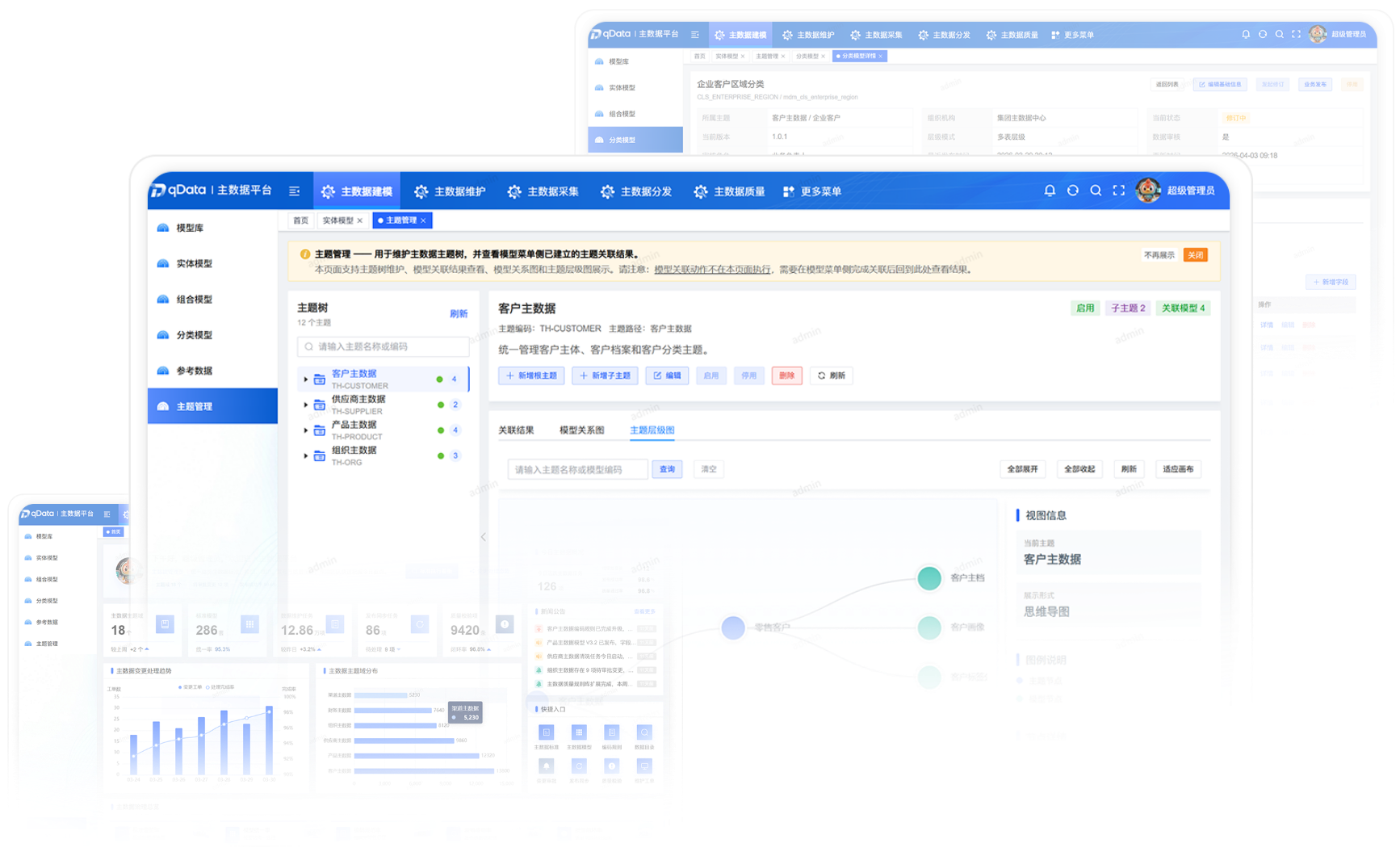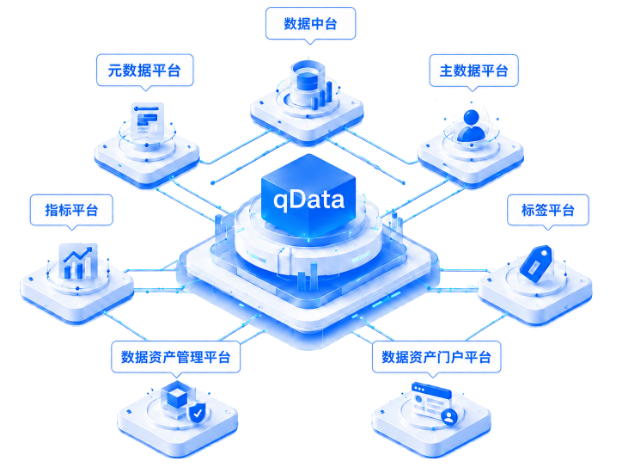

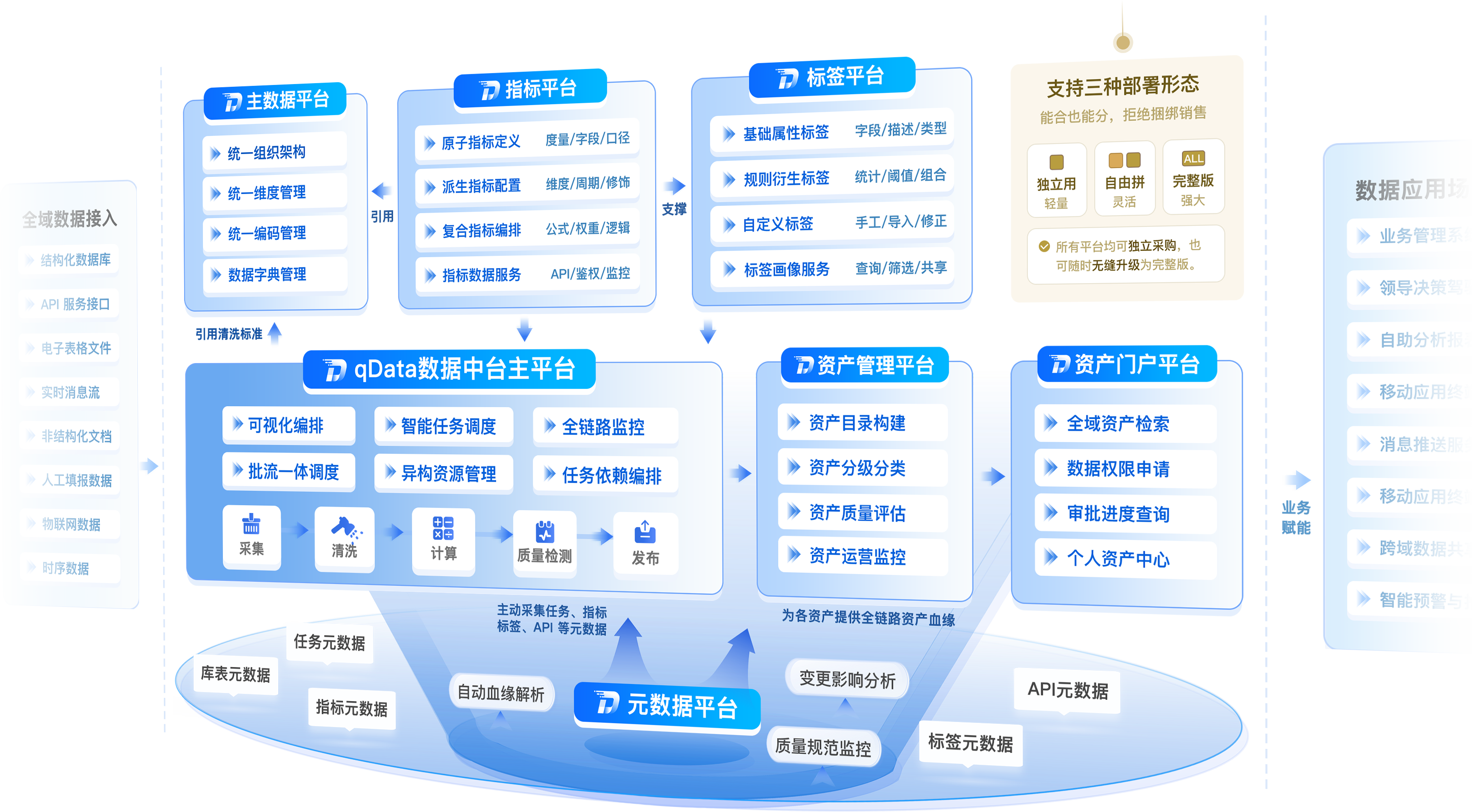

An integrated intelligent data foundation for enterprise transformation and product innovation.
Standardize enterprise modeling and build a reusable architecture for trusted data assets.
Unify business terminology and metric definitions so teams work from the same language.
Visualize lineage across the full stack to make large-scale data relationships easy to inspect.
Apply intelligent rules and continuous monitoring to keep business-critical data highly available.
Combine granular access control with masking policies to strengthen compliance boundaries.
Track security events end to end and keep operational risk visible.
Integrate diverse sources efficiently and build a stable unified lakehouse foundation.
Ship with rich connectors out of the box to remove system boundaries faster.
Turn governed assets into reusable APIs and create an agile enablement layer for the business.
Build an enterprise knowledge layer through unified metadata modeling and end-to-end lineage.
Create a scalable semantic layer for complex business objects and data domains.
Collect metadata from databases, pipelines, and BI tools to reduce manual maintenance.
Turn metadata into a searchable, organized resource system.
Track table-level and field-level dependencies to understand impact before changes go live.
Assess downstream risk early and help teams ship structural changes with confidence.
Keep complete change lineage for tighter control and traceability.
Organize domains and layers into a clearer enterprise knowledge index.
Keep complete histories of metadata versions and operations for governance and compliance.
Keep catalog, approval, and audit steps on one governed path.
Create a single source of truth and remove cross-functional information fragmentation.
Support hierarchical and multi-dimensional modeling across complex enterprise structures.
Unify code systems and mapping relationships to reduce inconsistency between applications.
Build stable mapping relationships between master and business systems.
Use built-in comparison and cleansing rules to sustain master data accuracy over time.
Deliver trusted master data consistently into ERP, CRM, and operational systems.
Watch latency, volume, and stability from a single control view.
Cover creation, approval, distribution, change, and archive in one closed-loop workflow.
Design permissions around roles and workflows while keeping operational efficiency intact.
Retain evidence and change history after master data is distributed.
Build a governed metric service layer so every decision starts from the same facts.
Standardize atomic, derived, and composite metrics under one managed framework.
Track metric logic changes and support safe migration when business semantics evolve.
Manage metrics as governed assets with a clearer entry point.
Organize metrics by operating theme to better align with real business conversations.
Trace the models and dimensions behind every KPI to improve interpretability and trust.
Bind scopes, metrics, and semantics into one searchable structure.
Publish metrics consistently to portals, dashboards, and internal applications.
Give executives and analysts one place to explore trusted metrics and reusable definitions.
Unify how metrics are delivered into portals, reports, and apps.
Standardize tag semantics, production, and delivery for refined operations and AI activation.

Build maintainable tag structures by domain, object, and scenario.
Keep tag definitions, calculation logic, and updates under one standard.
Track coverage, accuracy, and stability of production tags over time.
Generate explainable business tags quickly with a governed rules engine.
Recognize text, behavior, and relationship signals through models and agents.
Update tag states around event streams to support real-time scenarios.
Aggregate tag perspectives around an entity to form reusable profile entrances.
Help teams quickly find reusable tag assets across the platform.
Deliver governed tags to applications and models through unified services.
Manage classification, ownership, value, and lifecycle of enterprise data assets in one closed loop.
Classify assets by value, sensitivity, and scenario with one standard.
Clarify owner, steward, and business responsibility across asset domains.
Map system objects into a governed enterprise asset catalog.
Evaluate asset value through access, reuse, and downstream contribution.
Unify access rules, scenario scope, and governance constraints for every asset.
Apply fine-grained controls around catalog, scenario, and service boundaries.
Route onboarding, deprecation, and change through one approval process.
Record evolution and dependency impact to reduce platform operating risk.
Bring issue handling and governance actions into one collaborative workbench.
Provide a unified portal for business discovery, self-service access, and governed asset consumption.
Surface themes, key assets, and frequent actions from one unified entry.
Organize portal content and navigation around business domains and scenarios.
Combine keyword and semantic retrieval to locate governed assets faster.
Standardize request paths and shorten time-to-access for governed assets.
Bring service access, documentation, and examples into one portal entry.
Keep updates, reminders, and lifecycle changes in a continuous subscription flow.
Recommend relevant assets and topics based on roles, scenarios, and usage context.
Centralize campaign notices, governance updates, and service changes in one view.
Deliver onboarding tips, policies, and next actions directly in the portal journey.